
Alchemy & natural philosophy / 3rd-4th century CE
Preparation of Verdigris for Emerald
A Stockholm Papyrus verdigris method tested with different vinegars and oiled versus non-oiled copper.
Source
Papyrus Graecus Holmiensis / Stockholm Papyrus, Method 74, translated by Earle Radcliffe Caley.
Question
Does vinegar type or oiling the copper meaningfully change the verdigris produced?
Materials
- Copper sheet
- 5% white vinegar
- 50% vinegar
- Balsamic vinegar
- Olive oil
- Mason jars
- Nylon fishing line
- Pumice stone
Method
- Cut copper into strips and cleaned the surfaces with pumice and water.
- Prepared oiled and non-oiled copper samples.
- Suspended the copper over vinegar inside sealed jars without touching the liquid.
- Scraped verdigris morning and evening for two weeks.
- Weighed sample yields and compared color, texture, and copper surface changes.
Observations
- 5% vinegar produced the highest average yield in the small sample set.
- 50% vinegar samples left brighter copper after scraping, suggesting less unwanted copper oxide.
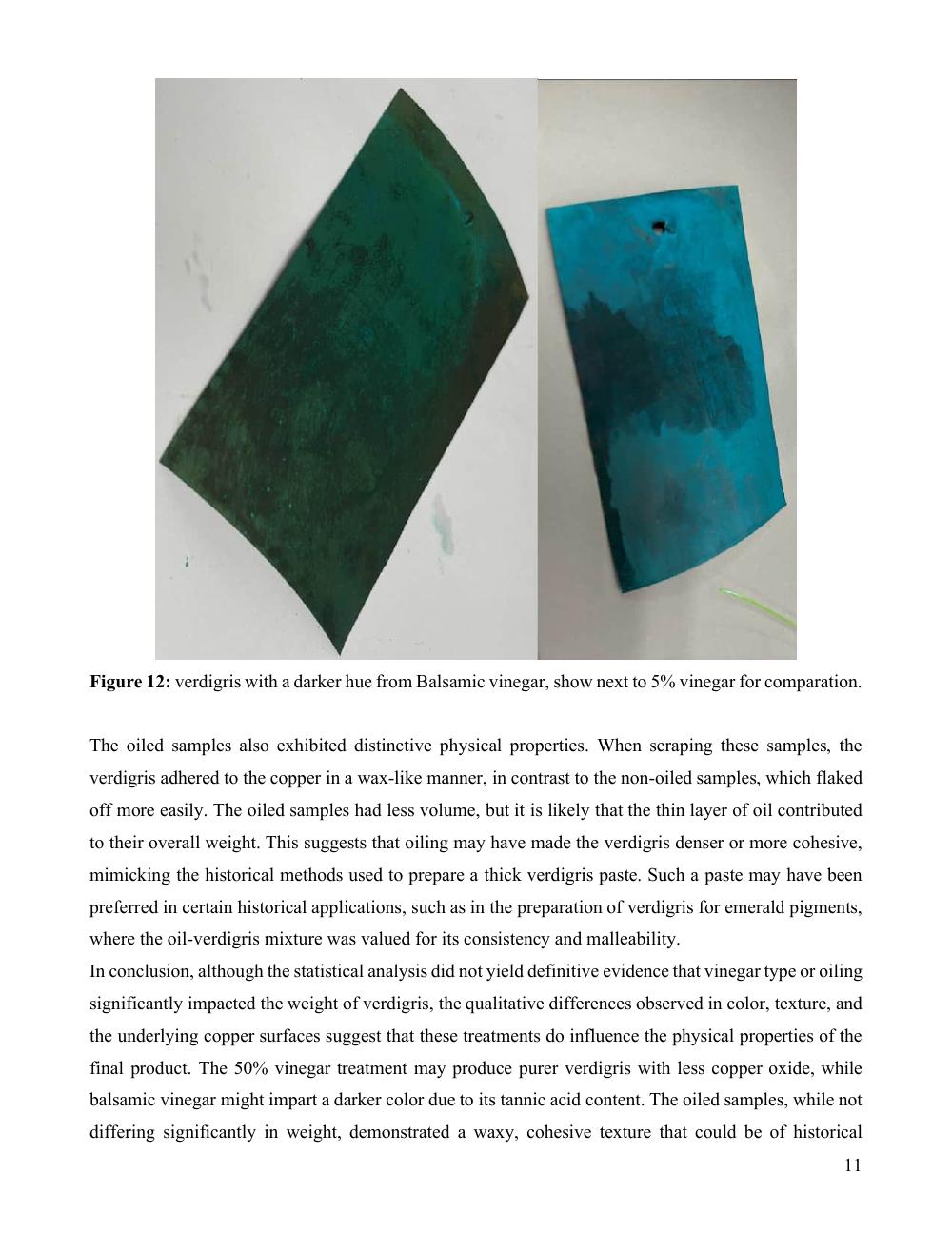
- Balsamic vinegar produced darker material.
- Oiled samples scraped off waxier and more cohesive than non-oiled samples.
Result
- The numbers were suggestive rather than definitive.
- The physical differences were more interesting than the weight data alone.
Uncertainty
- The small sample size limits statistical confidence.
- Weight alone may obscure historically meaningful differences in purity, texture, and handling.
- The source specifies sharp vinegar but does not define vinegar type or oil with modern precision.
References
- Caley, Earle Radcliffe. The Leyden and Stockholm Papyri.
- Papyrus Graecus Holmiensis / Stockholm Papyrus.
- Kuhn, Hermann. Verdigris and Copper Resinate.
- Cobb, Cathy, and Monty L. Fetterolf. The Chemistry of Alchemy.
Next
- Repeat with more samples and add chemical or microscopy work if practical.