
Historical games / 100 BCE-699 CE
Ludus Duodecim Scriptorum
A leather travel version of the Roman Game of Twelve Inscriptions, made to be played and hauled around without pretending leather is the surviving artifact record.
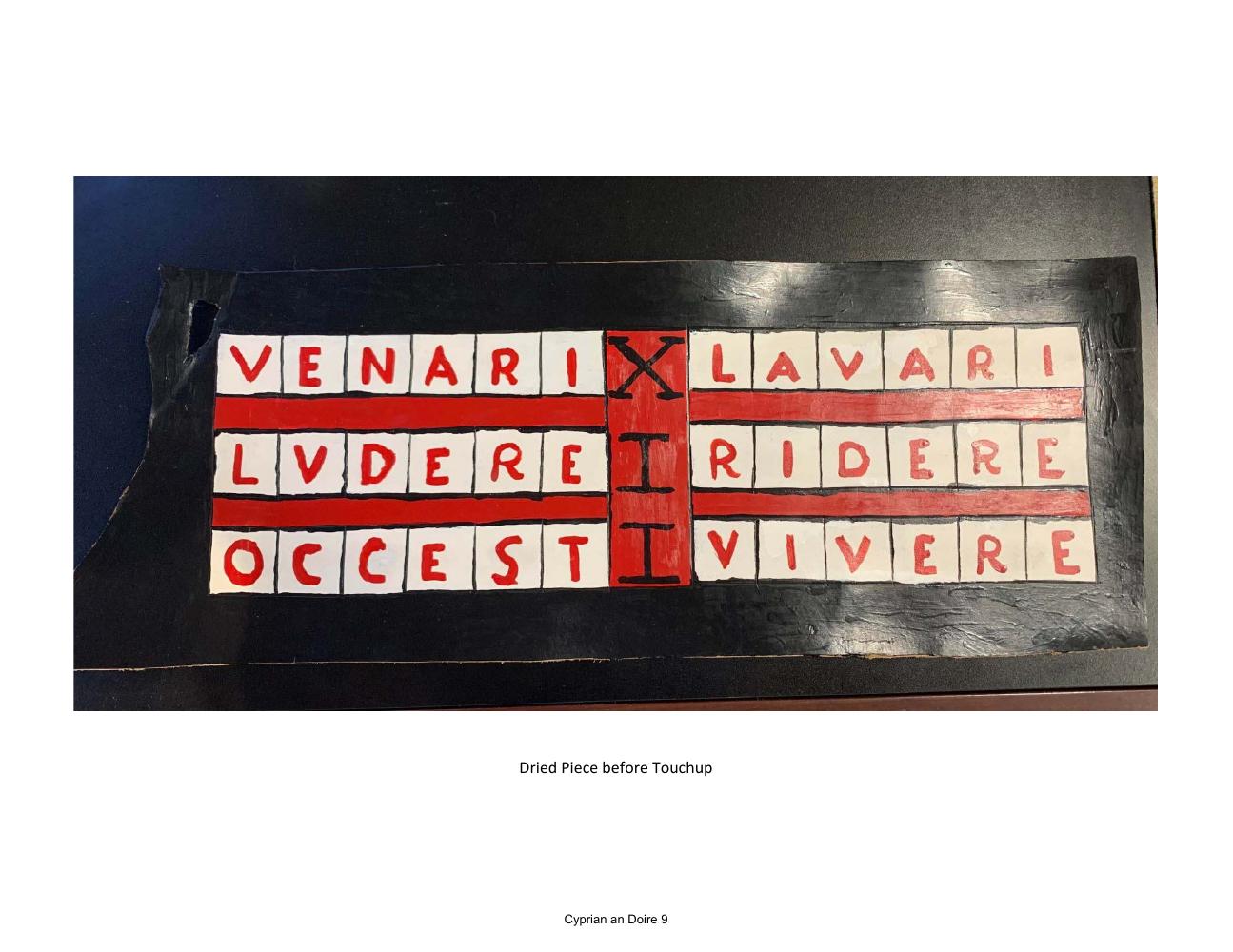
Source
Roman board-game scholarship, archaeological board evidence, Isidore of Seville, Locus Ludi, and reconstructed rules from related games.
Question
How do you make a playable Roman racing game when the board evidence survives better than the rules?
Materials
- 9 x 24 inch veg-tan saddle skirting leather
- Black, white, and red leather paint
- Game tokens
- Dice
Method
- Cut a portable leather board sized around the intended tokens.
- Laid out 1.5 inch cells and the central betting area.
- Wetted the leather, tooled the lines, then painted the cells, borders, and lettering.
- Used a reconstructed rule set drawn from related Roman racing games and later evidence.
Observations
- The portable leather format is useful for play even though the strongest surviving evidence is stone, wood, and graffiti.
- The exercise makes the gap between surviving boards and surviving rules very visible.
Result
- The result is portable, playable, and honest about the compromise: a modern leather travel board built from an ancient layout and a reconstructed rule tradition.
Uncertainty
- No complete ancient rules for Ludus Duodecim Scriptorum survive.
- A leather travel board is practical for modern use but is not documented as an extant surviving Roman object.
References
- Austin, R. G. Roman Board Games I and II.
- Isidore of Seville, Etymologies.
- Bell, R. C. Board and Table Games from Many Civilizations.
- Locus Ludi database of ancient gaming boards.
- Schaedler, Ulrich. XII Scripta, Alea, Tabula.
Next
- Add public rules notes and the evidence map behind the reconstruction.