
Historical chemistry / 13th century
Mint Vinegar
A 13th-century Syrian mint-vinegar distillation that produced a usable result and a very clear equipment lesson.
Source
Scents and Flavors: A Syrian Cookbook, edited and translated by Charles Perry, recipe 3.7.
Question
Can mint and vinegar be distilled into something culinarily useful, and what does the short recipe leave unsaid?
Materials
- Fresh spearmint
- 5% white distilled vinegar
- Distillation apparatus
- Coffee filters
Method
- Harvested, chopped, and crushed spearmint.
- Mixed the mint with an equal part of white distilled vinegar.
- Distilled the mixture and collected distillate after boiling.
- Filtered and bottled the surviving distillate after equipment failure.
Observations
- The mixture boiled over and contaminated the collection vessel.
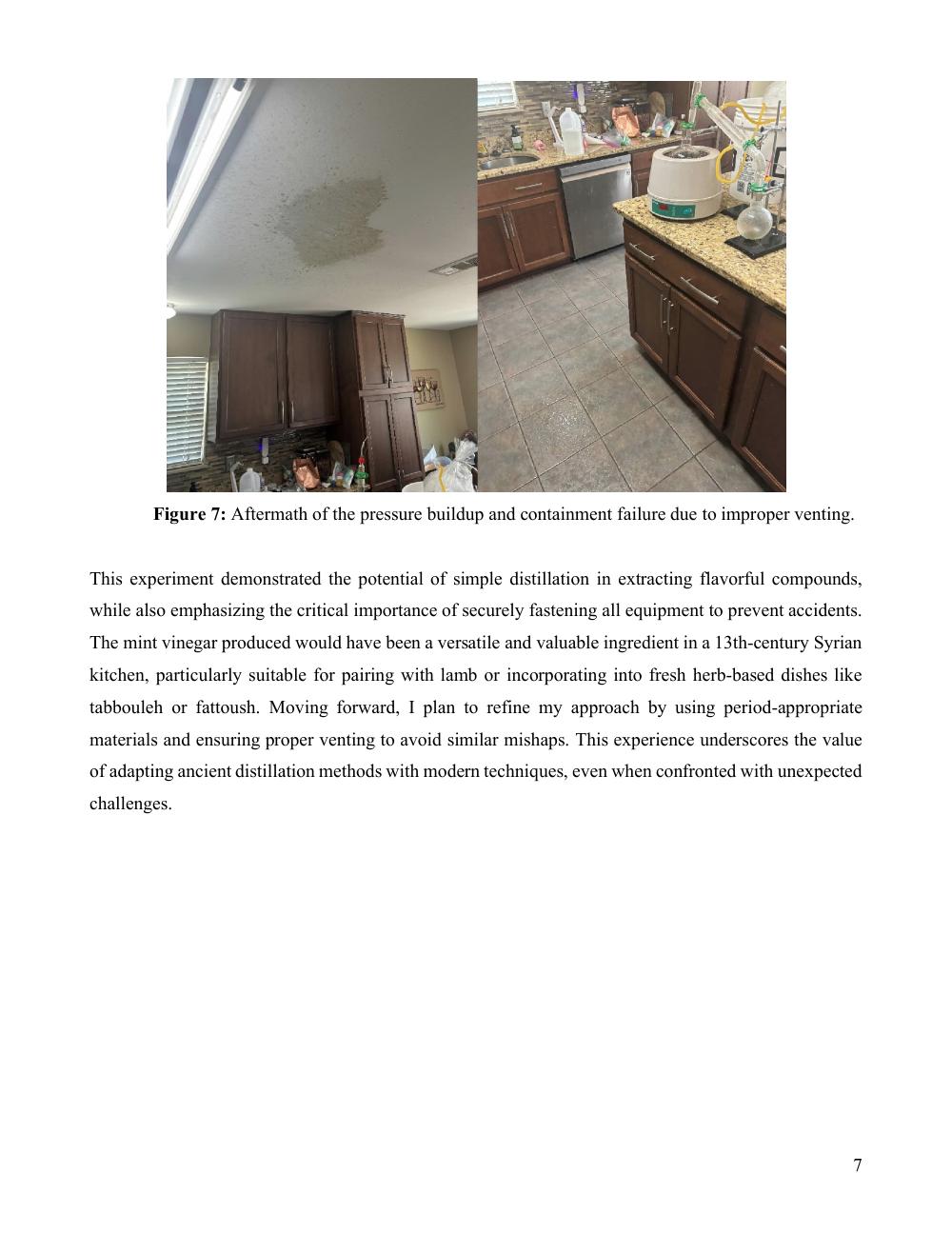
- A plugged vent caused pressure buildup and a containment failure.
- Coffee filters salvaged enough material to evaluate the result.
Result
- About four ounces survived.
- The vinegar stayed sharp but picked up cool, sweet, herbaceous mint notes.
- Also: do not plug the vent unless you want boiling mint vinegar distributed across the kitchen.
Uncertainty
- The accident interrupted yield and makes the final volume less useful as a process benchmark.
- The recipe gives very sparse equipment and procedure details.
References
- Perry, Charles, ed. and trans. Scents and Flavors: A Syrian Cookbook.
- Al-Hassani, S. T. S. 1001 Inventions.
Next
- Repeat with safer venting and more period-appropriate equipment.